To vaccinate, or not to vaccinate, is that really a question?…

It is sometimes challenging for some of us that have been raised during the years of enormous vaccination efforts to understand the widespread incidence/prevalence of infectious diseases such as measels, diptheria, pertussis, polio, etc., to name just a few. In fact, during the 1900’s cases of each of these numbered in the hundred of thousands in their peak, claiming thousands of lives each year. Thankfully, due to the advent of vaccines, there has been remarkable progress in the attempt to eradicate these deadly diseases. However, in order for vaccinations to have there fullest potential parents need to abide by the vaccination recommendations to assure herd immunity and optimize the prevention of disease, transmission and deaths. Surprisingly, even with this biomedical achievement, there are parents that are hesitant to follow the vaccination schedule. I think one obstacle is that some parents may lack understanding of what vaccines are and how they can be useful to protect their precious children.

Gratefully, our bodies have a natural way to protect us and acquire immunity when exposed to infectious agents. The principle behind immunization is to mimic the events that are normal to the adoptive immune response. The protection provided by immunization are artificial but it can either be passive or active. According to our text Nester’s Microbiology, artificially acquired passive immunity can prevent disease or limit the duration of disease by injecting a person with antibodies produced by other people or by animals. However, artificially acquired active immunity results from exposure to antigen/vaccine that amounts an immune response, including memory B cells for lasting protection.

Vaccines not only protect an individual against disease but they can also prevent diseases from spreading in a population. This is because of a phenomenon known as herd immunity, where the vaccination of sufficiently high enough members of a population prevents the spread of a contagious disease within a population. Furthermore, herd immunity is credited for the dramatic declines in a lot of the childhood diseases, both in the United States and in developing countries. We can credit herd immunity because we can see the unfortunate instances where diseases reappear and spread as a direct consequence of parents’ failure to have their children vaccinated. For example, in 2019 there was a surge of measles cases in the US and the world, the greatest numbers reported since 1992. The report supports that the majority of cases were unvaccinated people. Polio, is another example of still having some cases in Endemic countries often due to lack of access to vaccine. The question then remains, why wouldn’t all parents take advantage of immunization programs so we can get rid of these preventable diseases? Both clinical trials and national agencies have provided data that support the safety and efficacy of vaccines so parents have resources available to aid in their decision making. Also, adverse events are routinely reported to help monitor safety control. Therefore, I think parents can benefit from understanding what makes up a vaccine and the characteristics that make them so valuable.

One feature of vaccines can be categories into two types, whether they are attenuated or inactivated. An attenuated vaccination agent can replicate within its host, promoting the production of memory B cells and affording longer lasting immunity; whereas an inactivated vaccination agents cannot. For example, the polio vaccine has two variations that include both of the aforementioned types. Historically, there are three known serotypes of poliovirus that have developed vaccines, any of which can cause the disease. One type is originally called the Salk vaccine and it was developed in the mid-1950s, consists of inactivated virus particles of all three serotypes. The newer more common name for this vaccine, is the inactivated polio vaccine (IPV). IPV has been shown to successfully lower the rate of the disease dramatically but had the disadvantage of requiring a series of injections for maximum protection. This is especially difficult and less appealing in developing lands where access to vaccines are not so readily available. The solution, in 1961, the Sabin vaccine became available. The more common name today for this vaccine is the oral polio vaccine (OPV), which consists of attenuated strains that replicate in cells that line the throat and intestinal tract. This vaccine has the advantage of cheaper oral administration, often requiring only a couple doses and offers longer lasting immunity. However, there are some disadvantages of attenuated agents that need to be considered, especially for immunocompromised individuals. There are times when the agent can mutate to become pathogenic again and can even cross the placenta to damage an unborn child. Also, since the agent is active they require refrigeration, a luxury not always attainable in developing countries.

So what has been the results of vaccinations such as the polio vaccine? Well, polio has been eliminated from the United States due to the miraculous recommendations to use the OPV for over 40 years, from 1963 until 2000. Because of this, today, there isn’t wide-spread vaccination needed, however, since 2000, only IPV is recommended to prevent polio in the United States. In most other countries utilizing vaccines, the results have been similar. Sadly, some countries are having to deal with the impact of polio. So far in 2020 there are 20 reported cases of polio globally, apparently all in Pakistan. There has been a resurgence of polio with wild poliovirus cases increasing from 12 in 2018 to 144 by the end of 2019. Therefore, to affirm a sense of urgency, just last week, “the current Secretary-General of the United Nations (UNSG) António Guterres visited a kindergarten school in Lahore, Pakistan during the first nationwide polio campaign of the year and vaccinated students with the polio vaccine. More than 39 million children across the country are set to be vaccinated during the February campaign.” There are extensive campaign efforts to eradicate polio in as little as within the next 3 years. I think his visit is timely and the implementation of the Pakistan Polio Eradication Programme is bound to lead to re-evaulations in the way we think about the disease and make us all world-wide better able to respond to way that we can prevent increased virus transmission.
To each, his microbiome…

A microbiome consist of the genetic material of the associating living and non-living organisms and viruses that live on/inside the human body. Wikipedia notes that each individual exist along side “trillions of bacteria, fungi, and other microbes.” The microorganisms that inhabit an individual are unique and are important residents of the human body, occupying several of our body systems including the skin and gut. The microbiome can aid in protection against infection in many ways, such as, 1. covering sites that might otherwise be used for attachment by harmful organisms, 2. consuming available nutrients, 3. producing compounds that are toxic to other bacteria, 4. stimulating the adaptive immune system, etc. In fact, the hygiene hypothesis expands this further by recommending that the more exposure to microbes the better the implications to health (immune system, heart, weight). Therefore, the intimate relationship between the microorganism and humans is symbiotic.

Humans and microorganism mostly have a mutualistic and even protective relationship, but sometimes the host-microbiome interaction can become pathogenic. Consequently, Lois Pasteur is noted for showing an association between microorganism and infectious disease. Similarly, Koch developed a postulate to help us identify particular microorganism suspected in causing a disease. Therefore, it’s not surprising that alterations to gastrointestinal microbiome have been linked to various human diseases. These diseases range from metabolic and inflammatory diseases, obesity, hypertension, cardiovascular disease, diabetes, gastric cancer, and potentially Alzheimer. In this context, common microbial infectious agents, especially Porphyromonas gingivalis, may be associated with the Alzheimer Disease brain via apparent shared common disease pathways. “Inflammatory mediators can erode the proteins that preserve the full integrity of the blood-brain barrier (BBB) within the brain, as shown previously. Inflammatory mediators can erode the proteins that preserve the full integrity of the blood-brain barrier (BBB) within the brain, as shown previously.”

Considering the implications of microbiome in health and disease the Human Microme Project took on the task of sequencing the genome of the human microbiota. Most of the focus was particularly on the microbiota that normally inhabit the skin, mouth, nose, digestive tract, and vagina. There are ways to individually improve the microbiome, such as eating high fiber foods and vegetables, eating fermented foods containing live microbes, and even taking probiotic supplements. Another important way to maintain healthy microbiotic is caring for one’s oral health. Actually, the human mouth consists of diverse micro-organisms. These species can enter the oral cavity by our foods, putting our hands in our mouths, direct contact with select bacteria, viruses, fungi and protozoan. The oral microbiome can be maintained by our diets. Really acidic conditions in the mouth can lead to colonization of biofilm and plaque that can lead to cavities and periodontal diseases and even impact our systemic health. Therefore, promoting a balanced microbiome, particularly in the mouth and gut, is the key to maintain or reestablish health.

A fickle flu…?

Understanding the ever changing influenza virus can be an arduous undertaking, to say the least. However, this task can become more manageable by examining the most common and two main types, including Types A and B. These types are routinely spread in humans and give rise to the infamous and unwavering seasonal flu epidemics each year. The influenza virus is made more complicated because type A can further be broken down into sub-types depending on the expressed surface proteins. In fact, in any given season, a variety of versions of types (A & B) and subtypes (influenza A) can circulate and infect individuals leading to its infectious disease.

Influenza infections are caused by a virus that acts on an individual’s respiratory system. Common port of entry include the nose, eyes and mouth. The flu viruses can survive in the air in droplets when an infected person coughs, sneezes or even talks, that can later be transmitted directly by inhalation, or indirectly from touching germ-laden fomites. The most susceptible patients are young children (especially under 12 months), the elderly (65+ years), and others with compromised immune systems. Symptoms may start off feeling like a common cold, with indications encompassing a runny nose, sneezing and sore throat. Nevertheless, a key distinction is that influenza is an acute infection and symptoms tends to come on suddenly and the infectious process usually leaves patient’s feeling much worse with the flu. Additionally, the flu can progress to worsening conditions such as asthma flare-ups, bronchitis, pneumonia and even death.

To elaborate on the severity of the influenza epidemic, so far for the 2019-2020 season (October 1, 2019- February 1, 2020), there’s been an estimated 22-31 million cases of flu illness, 210-370 thousand flu-related hospitalizations and 12-30 thousands deaths caused by flu. Consequently, the risk of coming down with the the flu or suffering the consequence of death is significantly reduced by getting an influenza vaccine each year. The flu shot provides around 50-60% protection for those 16-64 years of age. This is mostly due to the rapid and ever evolving virus due it’s capacity for antigenic drift. Therefore, each year, scientist only can provide a “guess-timation” of 3-4 potential virus for a given year. Additionally, an annual shot is needed because immunity decreases with time. In short, some protection is better than none.

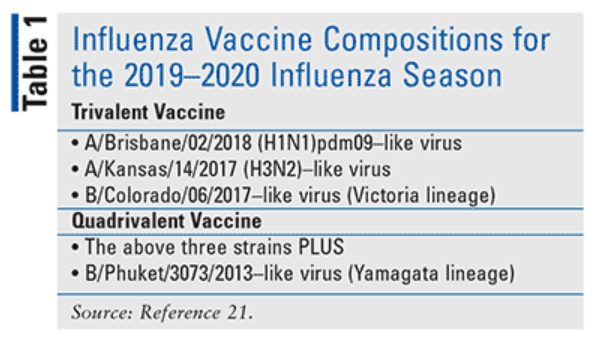
For the 2019-2020, the flu vaccine has the following components depending on whether you receive the Trivalent or Quadrivalent vaccine.

So far, it is estimated to have 40-60% effectiveness. In addition to flu vaccine which can protect you against 3 or 4 viruses that research suggests will be most common, there are other ways to prevent from getting the flu. This includes 5 simple tips.

  1. Avoiding close contact with those known to have the flu,
  2. If you are sick with the flu, do not attend school or work to avoid spreading the flu
  3. Cover your mouth and nose with tissue when you cough or sneeze or sneeze into your elbow
  4. Avoid touching your face. Particularly, the virus spreads by touching your eyes, nose and mouth
  5. Wash your hands frequently with soap and water

Coronavirus…”2019-nCoV”

Coronaviruses (CoV) stem from a family of viruses that range in degree of illness starting from as mild as the common cold to more severe diseases such as Middle East Respiratory Syndrom (MERS-CoV) and Severe Acute Respiratory Syndrom (aks SARS). However, a novel coronavirus has emerged and is being closely monitored by the Center for Disease Control (CDC). This new coronavirus (2019-nCoV) first identified in Wuhan city, resulted in thousands of confirmed cases in China. There has been mixed reviews on the transmission of this virus. There were some initial link to a large seafood and animal market, suggesting animal-to-person spread, however, some who were infected had no such connection leading to a suspicion that it could be person-to-person transmission.

Person-to-person spread is common among other strains of coronavirus which is mainly transmitted via respiratory droplets from an infected person who coughs or sneezes and can land in the mouths or noses of people who are nearby or possibly be inhaled into the lungs. Some common sign and symptoms are mostly respiratory in nature and include, fever, cough, shortness of breath and breathing difficulties. Symptoms can be more severe, including pneumonia, severe acute respiratory syndrome, kidney failure and even death. 

The World Health Organization has issued new travel tips to help keep people protect themselves if they have to travel. There are standard recommendations that have been established to prevent infection spread focused on regular hand washing, covering mouth and nose when coughing and sneezing, thoroughly cooking meat and eggs. Even with these recommendations, the disease has spread to other countries including the first case of 2019-nCoV in the United States. Once he was identified because of the public health travel alerts from China where he visited, he was tested and hospitalized after he was confirmed as having the 2019-nCoV. He presented with persistent dry cough, nausea and vomiting and eventually progressed to pneumonia. He was treated antiviral (remdesivir), and with antibiotics (fear of hospital-acquired pneumonia) and oxygen supplementation. At the time this article was published he was still hospitalized although showing marked improvement.

This case represents the value and importance of up-to-date reporting between local and state health departments, together with treating clinicians and CDC Emergency Operations Center. Evidently, this patient’s prompt actions and heeding travel alerts lead to appropriate identification and immediate isolation to help reduce further transmission. Finally, this case highlights the need for researchers and clinicians to better understand clinical diseases because having knowledge of the full spectrum of new disease emergence, including pathology, viral transmission and infection can better optimize clinical management and public health decision making.

Week 2 Coronavirus (2019-nCoV) Continued…

The current epidemic is rapidly changing and new cases are continuing to emerge. Del Rio et al., provided a recent update on the newly discovered virus. “As of February 4, 2020, more than 20 000 cases of 2019-nCoV have been reported, 98.9% of them in China, and the outbreak is linked to more than 400 deaths.” The new coronavirus is considered a pandemic, although the number of infections outside of China remains small. There are approximately 180 cases that have been detected in 26 countries, including 11 cases in the United States. Cases have revealed that the incubation period of this virus has been reported to be 5.2 days and some cases show it to be as long as 14 days. The growing concern involves the revelation that the epidemic is doubling every 6.4 days. In the more severe cases, patients have been admitted to the hospital presenting with pneumonia, and about a third of patients subsequently developed acute respiratory distress syndrome and even required care in the intensive care unit. However, most cases appear to be mild.

One of the advances in microbiology includes genetic sequencing data to help identify useful features. Zhou et al., identified that the “novel virus shares 79.5% of genetic sequence with SARS-CoV and has 96.2% homology to a bat coronavirus.” It is still unclear what the source of 2019-CoV is yet, although there has been some link to an animal intermediate species between bats and humans; but most of the infections were Human-to-human transmission. The current coronavirus epidemic is the third relevant outbreak of coronavirus in the 21st century, and has already surpassed the number of individuals infected since SARS in 2003 and MERS in 2012. It could be that the rates are higher with 2019-CoV because of the late identification of the etiologic agent. Also, the ability of the individuals to shed the infection while asymptomatic has been of concern more so than the greater infectivity of the virus compared with SARS.

Finally, it is important to note that most of the infected patients were healthy adults. Therefore, the basic public health instructions are to avoid travel in areas of outbreak, staying home when ill, frequent handwashing with soap and water, and exhibiting respiratory etiquette including covering the mouth and nose during sneezing and coughing and not touching one’s face. Early detection seems to be related to less severe disease and recovery.

Andrew Wakefield and the autism-vaccine controversies

Andrew Wakefield et al. in his 1998 article published in the Lancet is credited as giving rise to the autism-vaccine (MMR) controversy. However, further scientific research has failed to find evidence that supports a causal link between vaccination and the onset of autism. In fact, Kolodziejski compiled an analysis of Wakefield’s article in a paper that revealed how his case study of 12 pediatric patients who were referred to a paediatric gastroenterology unit created an uproar in the scientific community and presented much alarm to the public community. This was attributed to Wakefield’s wording and style of writing the paper in which he failed to draw a conclusive link between MMR vaccine and onset of autism but incited enough doubt that some could infer a link between the two.

It turns out that Wakefield may have had other motives for publishing this 1998 paper. Articles published accused Wakefield of “reporting histories for the children that were not consistent with their records and their parents’ recollections, at a time when Wakefield was also being paid by lawyers intending to sue MMR manufacturers”. Similar accusations surfaced that Wakefield manipulated patients’ histories to make money but Wakefield denies charges of data manipulation or having financial motives.

Since Wakefield’s article, the public’s hesitancy to vaccinate their children has seen an increase.  “By 2002, MMR immunization rates in the U.K. dropped below 85%, with some areas as low as 75%, and fell under the minimum for maintaining ‘herd immunity’ ”. However, several papers in the scientific community continues to reject the causal relationship. Accordingly, a paper written in 2004 from a “2001 review by the Institute of Medicine concluded that the evidence favors the rejection of a causal relationship at the population level between measles–mumps–rubella vaccine and autistic spectrum disorder.” (DeStefano, 2004). This cohort was a half a million Danish children in comparison to Wakefield’s 12.

Interestingly, although there have been numerous studies and showing strong evidence that the MMR vaccine is not a risk factor for autism, there are still many parents that continue to be concerned about vaccinating their children. Consequently, the concern about MMR vaccine has led to substantial reduction in MMR vaccination coverage and as a result there have been measles disease outbreaks. Therefore, the main challenge for communities at large continues to be in maintaining or restoring confidence in the safety of MMR vaccine to prevent future outbreaks of diseases that have previously almost been eradicated.

Interesting thing…

I am a non-traditional student. I gave up my career as a Clinical Research Associate in cancer clinical research to pursue a future in dentistry. I am the mother of two lovely boys that keep me busy. I am excited and terrified all at the same time for this class. My interest include how microbiology relates to anything dentistry related. I hope to include fun facts about how dentistry relates to the themes covered in this class. Here is my first link to dentistry where there is a link between periodontitis and microbiology.